
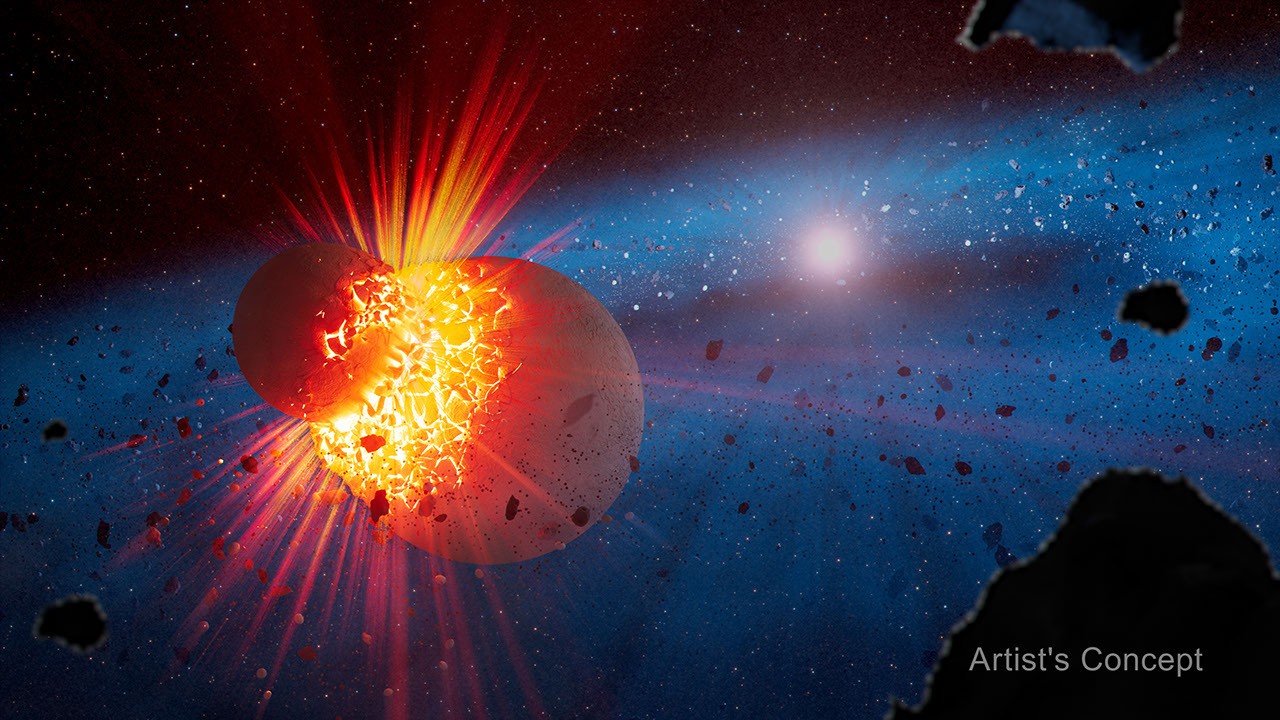
Building a planet can be a destructive business. A study using Webb and archived Spitzer observations examined 21 unusually dusty systems, looking for the aftermath of collisions around young stars.
The researchers found two broad chemical patterns. Silica-rich debris is consistent with powerful impacts between bodies roughly the size of Mars. Systems with less silica may instead record grazing encounters involving smaller, Moon-sized objects. These are interpretations of dust spectra, rather than direct photographs of colliding planets.
The silica-rich systems appeared only around stars younger than 300 million years. That suggests the most energetic collisions belong to an early chapter of planetary development. Studying their debris could help astronomers understand the kind of violent history that shaped Earth and its Moon.
Source: NASA report (2026-10-01).